
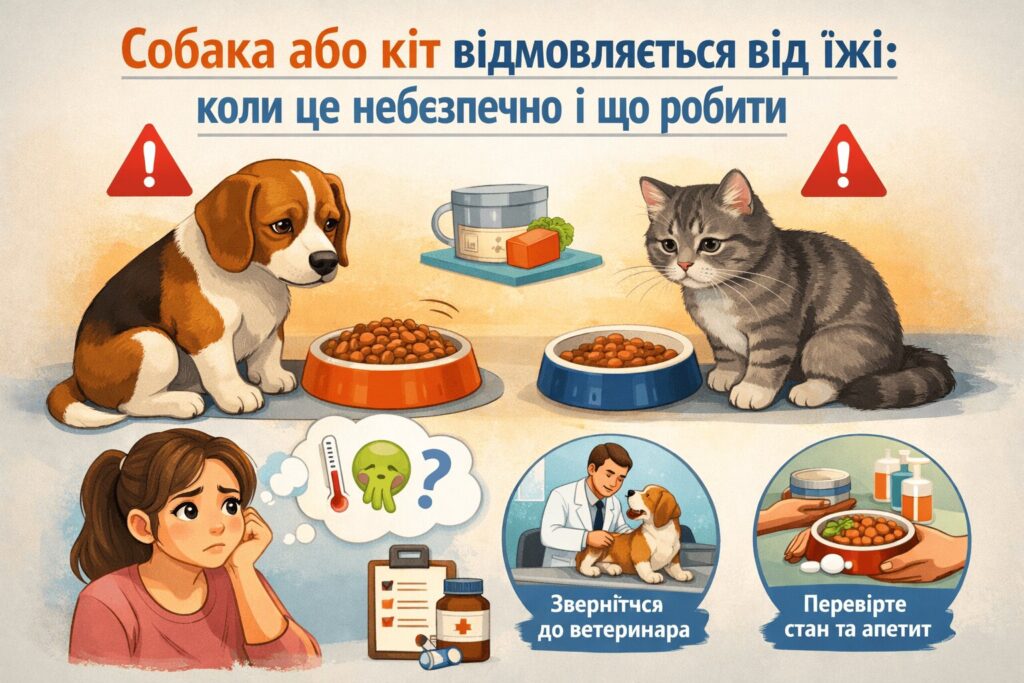
If your dog or cat refuses to eat, it does not always mean there is an emergency, but it is never a symptom that should be ignored. Some pets may eat less for a short time because of stress, a diet change, hot weather, mild stomach upset, or temporary discomfort. However, if a pet refuses food for longer than usual, becomes weak, hides, vomits, has diarrhea, seems painful, or shows any change in normal behavior, it is important to arrange an examination at a veterinary clinic. The main rule is simple: if your pet is not eating and does not look well, waiting too long is a mistake.
Appetite is one of the most useful indicators of a pet’s general condition. Owners often notice a loss of appetite before they see anything else clearly wrong. In some cases, a dog or cat may walk toward the bowl, sniff the food, and walk away. In others, the pet ignores both food and favorite treats. Sometimes the pet actually wants to eat but cannot do so comfortably because of nausea, mouth pain, dental disease, weakness, or abdominal discomfort. That is why it is important to pay attention not only to the fact that the pet is not eating, but also to how long this has been happening, whether water intake has changed, and whether other symptoms appeared at the same time.
Age, species, and underlying disease also matter. A healthy adult pet skipping one meal is not the same as a kitten, puppy, senior pet, or an animal with chronic illness refusing food. In small or vulnerable patients, a short period without normal food intake may become serious much faster. Some pets can deteriorate because of dehydration, weakness, low energy intake, or worsening of the underlying illness. That is why there is no universal advice to “just wait a day or two” for every animal.
In this article, we explain why a dog or cat may refuse to eat, when careful observation at home may be reasonable, when a veterinary visit is already needed, what owners should not do on their own, and which examinations may help identify the cause. The goal is not only to answer whether reduced appetite is dangerous, but to help owners understand when a loss of appetite may be the first warning sign of a more serious problem.
Why a Dog or Cat Refuses to Eat
There are many reasons why a pet may stop eating, and they range from relatively mild to potentially dangerous. One of the most common mistakes owners make is assuming the pet is simply being picky. In reality, a reduced appetite can be linked to nausea, pain, stress, dental disease, gastrointestinal irritation, inflammation, infection, toxic exposure, metabolic disease, or internal organ problems. In other words, a loss of appetite is usually not the disease itself. It is a symptom, and the real question is what stands behind it.
A common cause is stress. Dogs and cats may eat less after a move, travel, grooming, a new animal at home, loud events, changes in routine, visitors, construction noise, or even smaller changes in their environment. Cats in particular may react strongly to changes that humans consider minor, such as a new feeding location, a different smell in the house, or changes around the litter tray. In those situations, reduced appetite may improve once the pet relaxes. Still, even stress-related appetite loss should not be ignored if it lasts too long or if the pet starts showing other symptoms.
Another important group of causes includes mouth and dental problems. A pet may approach food and appear interested, but then avoid chewing because eating is painful. Gum inflammation, broken teeth, severe tartar buildup, mouth ulcers, oral injury, and other painful conditions can all reduce food intake. Owners may also notice drooling, chewing on one side, pawing at the mouth, dropping food, or a bad smell from the mouth. In such cases, appetite loss is not about the pet refusing food mentally. It is often about the pet being unable to eat normally.
Digestive problems are also very common. A dog or cat may refuse food because of nausea, gastritis, intestinal irritation, pancreatitis, dietary intolerance, swallowing something inappropriate, or a developing gastrointestinal disorder. Sometimes appetite loss appears together with lip licking, swallowing motions, drooling, vomiting, bloating, abdominal pain, or diarrhea. In some patients, nausea is strong enough that they will reject even favorite treats. When that happens, it becomes much less likely that the issue is simple fussiness.
It is also important to consider systemic illness. Pets may stop eating because of fever, pain, infection, liver disease, kidney problems, pancreatic disease, endocrine disorders, or other internal conditions. In many cases, the loss of appetite appears before the owner can identify a specific problem. That is why ongoing refusal to eat without an obvious harmless explanation should always be taken seriously.
Behavioral and feeding factors do sometimes matter as well. A pet may be reluctant to eat after an abrupt food change, after too many treats, or after being fed table scraps. Still, these possibilities should not be used too quickly to dismiss the symptom. The most important question is not only whether the pet is refusing its usual food, but whether its appetite is reduced overall and whether its general condition has changed.
When You Can Watch at Home and When a Vet Visit Is Needed
Not every reduced appetite requires immediate panic, but every case requires attention. If an otherwise healthy adult dog or cat skips one meal, continues drinking water, remains active, and has no vomiting, diarrhea, weakness, pain, breathing changes, or unusual behavior, short observation at home may sometimes be acceptable. But “observation” should mean real monitoring. Owners should pay attention to water intake, interest in food, normal urination and bowel movements, level of activity, and whether the pet behaves as usual over the next hours.
If a dog or cat is not eating for longer than expected, the situation changes. If the pet refuses food repeatedly, seems less interested in water, acts withdrawn, or shows any additional symptom, waiting becomes much less appropriate. This is especially true for cats, because prolonged lack of food intake can create serious metabolic risks. Kittens, puppies, senior pets, and animals with chronic disease also need faster attention because they may become dehydrated or weak sooner than a healthy adult animal.
Water intake is another important factor. If a pet refuses both food and water, the concern becomes much higher. If the pet drinks but vomits afterward, the risk rises further. Those are not situations where long home observation is a good idea. In such cases, the pet may need an examination, supportive care, and possibly laboratory tests or imaging to find out what is happening.
Owners should also consider the pet’s overall appearance. A pet that skips food but still responds normally, walks normally, seeks attention, and behaves like itself is different from one that hides, seems depressed, avoids touch, lies in one place, or breathes differently. Loss of appetite together with abnormal behavior often suggests that the problem is not mild. It may indicate pain, nausea, systemic illness, or significant stress on the body.
It is also a mistake to judge the seriousness of the situation only by whether the pet will eat treats. Some dogs and cats with true appetite loss may still accept something especially tasty or soft, particularly if mouth pain or nausea is fluctuating. That does not mean the condition is minor. It simply means the pet is willing to take a small amount of especially attractive food. If a pet will not return to normal feeding, the cause still needs to be assessed.
Short home observation makes sense only when the general condition is clearly good, the appetite loss is brief, and there are no warning signs. In all other situations, it is safer to arrange a veterinary visit early rather than late. Timely evaluation often makes the diagnosis easier and treatment more effective.
Warning Signs That Need Faster Action
The most important issue is not appetite loss alone, but appetite loss together with other symptoms. That combination often tells us whether the situation may be more serious. Owners should be especially careful if the pet is not eating and also looks physically or behaviorally unwell.
You should seek veterinary attention promptly if appetite loss is combined with any of the following:
- vomiting, especially repeated vomiting or vomiting after drinking water;
- diarrhea, especially frequent diarrhea or diarrhea with blood;
- lethargy, weakness, unusual sleepiness, or no interest in normal activity;
- labored or rapid breathing;
- pain, especially abdominal pain or strong resistance to touch;
- drooling, swallowing motions, or clear nausea;
- refusal to drink or obvious signs of dehydration;
- pale, gray, or yellowish gums;
- suspicion of poisoning or swallowing a foreign object;
- loss of appetite in a kitten, puppy, senior pet, or chronically ill patient.
If you see one or more of these signs, the goal should not be to force food or “make the pet eat something somehow.” The real priority is to determine why the pet is not eating. In these situations, proper examination is usually much more important than temporary feeding attempts at home.
What You Can Do at Home if Your Pet Is Not Eating
The first step is to stay calm and assess the situation properly. You should look at the whole picture, not only the food bowl. Is the pet alert or weak? Is it drinking water? Is there vomiting, diarrhea, abdominal discomfort, drooling, or unusual breathing? Did anything change in the routine, food, environment, or stress level? Could the pet have eaten something unusual, toxic, spoiled, or non-food? The answers to these questions are important and often help the veterinarian later.
One of the most useful things you can do is to provide a quiet and low-stress environment. Do not repeatedly pressure the pet with different food options every few minutes. Do not turn feeding into a stressful struggle. Instead, keep fresh water available, reduce stimulation, and give the pet a calm space while you monitor whether any interest in food returns.
You may offer the pet its normal food or a mild and appropriate option if advised, but it is important not to start random feeding experiments with fatty food, milk, sausage, heavily flavored human food, or rich treats. These choices can worsen nausea or digestive upset. If the pet refuses even safe favorite treats, that is usually more meaningful than refusing only its regular diet.
What you should not do is give human medication without veterinary instruction. Anti-nausea drugs, painkillers, antibiotics, antispasmodics, or digestive medications from a home cabinet can be dangerous for animals, can hide important symptoms, or can complicate the diagnosis. It is also not wise to force-feed a pet that seems nauseated, painful, weak, or unable to swallow comfortably.
It is very helpful to note when the appetite loss started, whether the pet is drinking, whether vomiting or diarrhea occurred, and whether there was access to anything unusual. If possible, remember what and when the pet last ate. This information often helps the veterinarian narrow the list of likely causes much faster.
If the appetite does not return, the condition worsens, or new symptoms appear, the right step is a veterinary visit. At that point the pet may need an examination, bloodwork, ultrasound, or other diagnostics depending on the symptoms. The most important idea is not to let home monitoring turn into unnecessary delay.
How Veterinarians Look for the Cause of Appetite Loss
When a dog or cat refuses to eat, the veterinarian’s job is not simply to “improve appetite,” but to identify the real cause. That is why a proper visit begins with detailed history-taking. The veterinarian will usually ask when the appetite changed, whether vomiting, diarrhea, weakness, pain, coughing, drooling, or breathing changes are present, whether there was access to toxins or foreign objects, whether the diet changed, and whether the pet has chronic disease. After that, a clinical examination helps assess temperature, hydration, gum color, oral health, abdominal comfort, breathing pattern, heart rate, and overall condition.
Very often, laboratory tests are needed. Blood tests can reveal inflammation, dehydration, liver problems, kidney disease, pancreatic changes, infection, metabolic disturbances, or other abnormalities that cannot be judged from appearance alone. In some cases, urine or stool testing may also be useful depending on the signs. If the pet has not been eating well for more than a short time, lab testing becomes especially valuable.
When there is concern about the abdomen, ultrasound of your pet may be recommended. Ultrasound can help evaluate the stomach, intestines, liver, gallbladder, pancreas, spleen, kidneys, and other abdominal structures. It is often useful when appetite loss is accompanied by vomiting, abdominal pain, weakness, bloating, or suspicion of internal disease. It helps the veterinarian move beyond guesswork and actually assess what is happening inside.
In some situations, radiography is also important, especially if there is concern about swallowing a foreign object, intestinal obstruction, or certain chest problems. If breathing changes are present together with weakness or appetite loss, the veterinarian may also consider other targeted examinations depending on the clinical picture. For example, if abnormal breathing is part of the problem, chest imaging or other diagnostics may be needed to determine whether the issue is gastrointestinal, respiratory, cardiac, or systemic.
Some patients need more than an outpatient visit. If the pet is weak, dehydrated, vomiting repeatedly, unable to keep water down, or too unstable to safely manage at home, inpatient care may be necessary. Hospital support allows the veterinary team to stabilize hydration, control symptoms, monitor changes closely, and continue the diagnostic workup at the same time.
The most important point is that loss of appetite is a nonspecific symptom. The same complaint can come from something mild or something very serious. That is why proper veterinary evaluation matters. Appetite stimulants alone are rarely the real answer if the underlying cause remains unknown.
Conclusion: When Waiting Is the Wrong Choice
If your dog or cat refuses to eat, the symptom should always be taken seriously enough to assess. Sometimes the cause may be relatively mild, such as stress, a minor dietary upset, or a brief discomfort. But in many cases, reduced appetite is one of the first visible signs of nausea, pain, inflammation, infection, toxic exposure, digestive disease, or a problem affecting internal organs. That is why the safest approach is not to ignore the symptom, but to evaluate it in the context of the pet’s whole condition.
Short observation at home may be reasonable only when the pet otherwise looks normal, continues drinking, has no additional warning signs, and the appetite loss is very brief. In all other situations, especially when there is vomiting, diarrhea, lethargy, refusal of water, pain, hiding, or breathing changes, it is safer to arrange a veterinary visit without delay. This is even more important for cats, young animals, older pets, and animals with chronic illness.
A very common mistake is hoping the pet will simply “start eating later.” Sometimes that happens. But when a pet stops eating because it feels unwell, waiting too long often means the underlying condition becomes harder to treat. Early examination, laboratory testing, ultrasound, or supportive care may prevent the situation from worsening.
If your dog or cat is not eating and the situation does not clearly look minor, the safer choice is to seek help. A timely veterinary examination can identify the cause faster, guide the right treatment, and reduce the risk of complications. In appetite loss cases, acting earlier is often much better than acting later.
